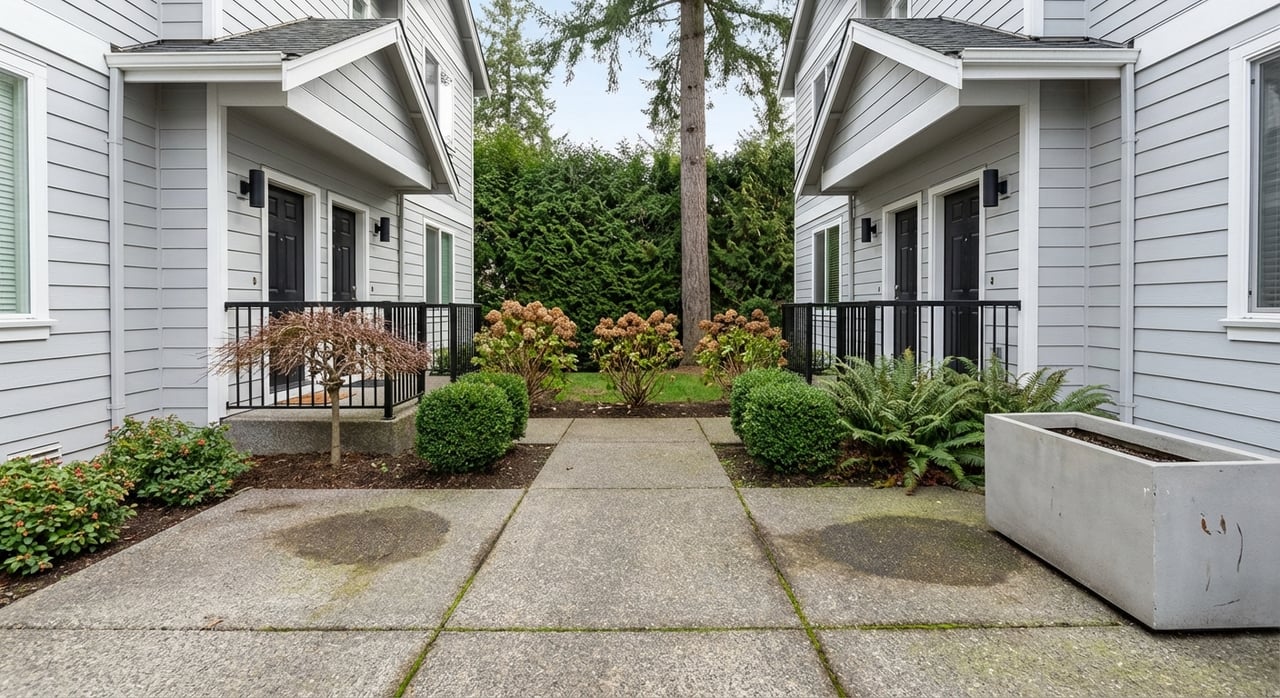
Is a condo or townhome in Everett the right move for you? If you want manageable monthly costs, less maintenance, and access to north Puget Sound jobs, attached living can be a smart fit. In this guide, you’ll learn current Everett price points, what to expect inside the buildings, key HOA and Washington legal rules, financing basics, commute tips, and a simple checklist to buy with confidence. Let’s dive in.
Everett prices at a glance
Everett’s attached homes offer real value compared to many nearby markets. Recent local snapshots show city condos often trading around the mid $300s, with many sales near about $340,000. Townhomes in Everett tend to cluster near the mid $500s, often around $550,000 to $560,000. Condos are more price sensitive with slightly longer days on market, while newer townhomes sell closer to a balanced pace.
Across the wider region, area median condo prices run higher than Everett’s city median. That means you can generally expect more affordability in Everett than in many King County locations, a trend consistent with recent NWMLS reporting. Many buyers choose Everett to stretch their budget while staying close to major employers, health care, and the waterfront.
What you can expect by property type
Condos: sizes and features
In Everett, you’ll find low to mid rise buildings downtown and older suburban condo communities. Typical 1 bedroom units often run about 500 to 900 square feet, with 2 bedroom units around 900 to 1,100 square feet. Downtown and waterfront buildings may include secure entry, elevators, fitness rooms, rooftop decks, storage, and assigned or garage parking. These amenities raise HOA dues but keep your maintenance list short.
Townhomes: space and garages
Everett townhomes are usually 2 to 3 stories with 2 to 4 bedrooms and attached 1 to 2 car garages. Many newer homes range roughly 1,150 to 1,900 square feet and include a small yard or deck. HOAs tend to focus dues on exterior care like roofs, siding, fences, and landscaping rather than big building systems.
Amenities and HOA dues
- Condos lean into shared amenities like gyms, elevators, and secure parking, which drive dues higher but reduce your personal upkeep.
- Townhome HOAs usually offer fewer shared facilities, which can mean lower dues and more private space.
- In Washington, monthly HOA fees vary widely by community. Some suburban HOAs are modest, while amenity heavy downtown condos can be several hundred dollars per month. Always confirm what dues include, such as water, sewer, garbage, building insurance, reserves, and maintenance.
Parking, storage, and EV readiness
Older buildings may offer one assigned surface space, while newer projects tend to include enclosed garage parking and storage. EV charging is growing, but many buildings require owner requests or HOA projects to add it. Washington law and updated community rules limit blanket bans on EV chargers or heat pumps. Associations can set reasonable standards, but they should not unreasonably delay approvals. Review the CC&Rs and architectural guidelines and use the association process described in recent Washington guidance noted by WSCAI’s industry journal. Learn more about these evolving rules in the WSCAI Journal overview of EV and retrofit provisions.
HOA rules and your protections in Washington
WUCIOA changes you should know
Washington adopted the Washington Uniform Common Interest Ownership Act (WUCIOA, RCW 64.90). Key pieces already shape how many HOAs operate, with more provisions applying broadly through January 1, 2026 and then January 1, 2028. WUCIOA standardizes budgets, reserve disclosures, open meetings, and resale certificate requirements, and adds owner protections. Get an overview of WUCIOA and its timeline from WSCAI’s guide.
Resale certificates, budgets, and reserves
Before you commit, Washington law gives you the right to a resale certificate packet. It includes the current budget, reserve study status, any unpaid or planned assessments, and the master insurance policy. Associations typically have 10 days to deliver it after request, and you’ll have a limited review window to approve or cancel based on what you learn. See the resale disclosure requirement in RCW 64.34.425.
Reserves matter. An underfunded reserve often leads to special assessments. Washington law outlines budget and reserve study disclosures for many associations. Review the latest reserve study and funding plan as outlined in RCW 64.34.380.
Rules that affect daily life
Check the CC&Rs and rules for pet policies, rental or short term limitations, parking, appearance standards, noise, and landscaping schedules. These directly affect your living experience and can impact financing and resale.
Financing and insurance for condos and townhomes
Project approval and warrantability
Many loans require the condo project itself to meet specific guidelines. Ask your lender early whether a building is warrantable and on an approved list. Lenders use tools like Fannie Mae’s Condo Status Finder to check eligibility. FHA financing depends on whether the project is FHA approved or qualifies for a single unit approval, which you can check with HUD’s FHA condo search.
If a building is not approved, you may face different down payments, rates, or need alternative loan programs. Getting clarity up front helps you write a stronger, cleaner offer.
The right insurance coverage
Two layers of insurance protect you: the association’s master policy and your unit owner policy (HO 6). Ask for the master policy’s certificate, limits, and deductibles. Then size your HO 6 to cover interior finishes, personal property, liability, and possible loss assessments. For a helpful primer, review this condo insurance overview.
Taxes and closing costs to plan for
Property taxes in Snohomish County vary by taxing district, with many effective rates in the mid 0.8 to 0.9 percent range. Use the county assessor to estimate taxes for a specific property. Washington’s Real Estate Excise Tax (REET) applies at the time of sale and is handled at closing. Explore local tax data in the county’s annual reports and resources.
Commute and neighborhood fit in Everett
Commute realities to Seattle
Driving I 5 from Everett to Seattle varies widely. WSDOT’s data shows an average morning peak near about 50 minutes in general purpose lanes, while a more reliable 19 out of 20 day commute can push toward 70 to 80 minutes during heavy congestion. Weigh average time and reliability when you plan your day. See commute stats on WSDOT’s I 5 mobility dashboard.
Transit options you can use
Everett Station connects to Amtrak, Sounder (N Line), and regional bus routes. Community Transit’s Swift BRT lines and local service provide strong north south and east west coverage, with park and rides across the county. Review routes and frequency on Community Transit’s Swift network page.
Lifestyle anchors to consider
Proximity to the Boeing Everett plant, Providence Regional Medical Center, and Naval Station Everett shapes local demand and daily routines. Downtown and Port Gardner continue to benefit from waterfront improvements, adding walkability and public spaces that appeal to condo buyers. Newer riverfront developments offer townhomes with garages and more private space.
Budget example: condo vs townhome vs single family
To visualize tradeoffs, here is a simple example using recent Everett level price points and common assumptions. Your lender will run exact numbers for you.
Example purchase prices:
- Condo: about $340,000.
- Townhome: about $550,000 to $560,000.
- Single family (county context): about $750,000.
Sample financing illustration (30 year fixed, 20 percent down), principal and interest only:
- Condo (loan about $272,000): roughly $1,700 to $1,800 per month at example rates.
- Townhome (loan about $444,000): roughly $2,800 to $3,000 per month.
- Single family (loan about $604,000): roughly $3,800 to $4,000 per month.
Then add:
- Property taxes based on the county assessor.
- HO 6 policy for condos or townhomes, plus the master policy details and deductibles.
- HOA dues, which vary by building and amenities.
- A maintenance reserve. Condo owners shift much of exterior work into dues and reserves, while single family owners often budget 1 percent of home value per year for upkeep.
Practical takeaway: condos usually offer the lowest price point with less exterior responsibility but rely on healthy HOA reserves and clear budgets. Townhomes are the middle ground, with garages and more privacy plus manageable exterior care through the HOA. Single family homes cost more up front and require higher personal maintenance reserves, but offer the most control.
Step by step buyer checklist for Everett
- Get pre approved and ask your lender to check condo project eligibility early using Fannie Mae and HUD tools.
- Request the resale certificate packet as soon as you are serious. Review budget, reserves, unpaid or planned assessments, insurance, CC&Rs, and recent meeting minutes.
- Confirm the HOA fee and exactly what it covers. Ask about utilities, building insurance, reserve contributions, and any scheduled projects.
- Check reserve study age and percent funded. Ask about past special assessments and planned capital work.
- Verify the master insurance deductible and what interior finishes you must insure with your HO 6.
- Review pet, rental, and short term rules. Confirm parking counts, guest parking, storage, and EV charging policies.
- Compare commute options. Look at WSDOT’s reliable commute times and Community Transit routes near your target homes.
- Estimate total monthly cost. Add principal and interest, taxes, HOA dues, HO 6, and your maintenance reserve.
- Walk the neighborhood at different times of day. Check noise, parking, and access to groceries, parks, and healthcare.
- Partner with a local agent who will help you analyze the packet, negotiate repairs or credits, and manage deadlines.
Ready to explore Everett attached living?
If you want smart value near major jobs and the water, Everett’s condos and townhomes deserve a close look. With the right homework on HOA health, financing, and commute fit, you can buy with clarity and confidence. Have questions or want to tour? Connect with Jovana Rodriguez for a friendly, bilingual consult and local listings that match your budget.
FAQs
What is the main difference between an Everett condo and a townhome?
- Condos are units within a shared building with more common amenities and higher shared maintenance through dues, while townhomes are multi level homes with attached garages and fewer shared facilities.
How much are HOA dues for Everett condos and townhomes?
- Dues vary by community and what is included. Some suburban HOAs are modest, while amenity heavy downtown condos can run several hundred dollars per month. Always verify what utilities and services are covered.
How long does it take to get the condo resale certificate in Washington?
- Associations typically have 10 days to provide the resale certificate after it is requested, and buyers get a short window to review and approve or cancel.
Can I use FHA financing to buy a condo in Everett?
- Yes, if the project is FHA approved or qualifies for a single unit approval. Have your lender check HUD’s FHA condo database early.
Are EV chargers allowed in Everett condo or townhome communities?
- Washington rules limit blanket bans. HOAs can set reasonable safety and architectural standards, but they should not unreasonably block or delay compliant installations.
What is a realistic Everett to Seattle commute?
- Average morning peak drives can be near about 50 minutes, but a more reliable 19 out of 20 day commute can approach 70 to 80 minutes during heavy congestion. Consider transit for more consistent travel times.
